
Replacing a refrigerator? Compare your removal options
Start with the retailer or utility if they offer an appliance program. Use full-service removal when the refrigerator is inside, access is difficult, or it is part of a larger household load.
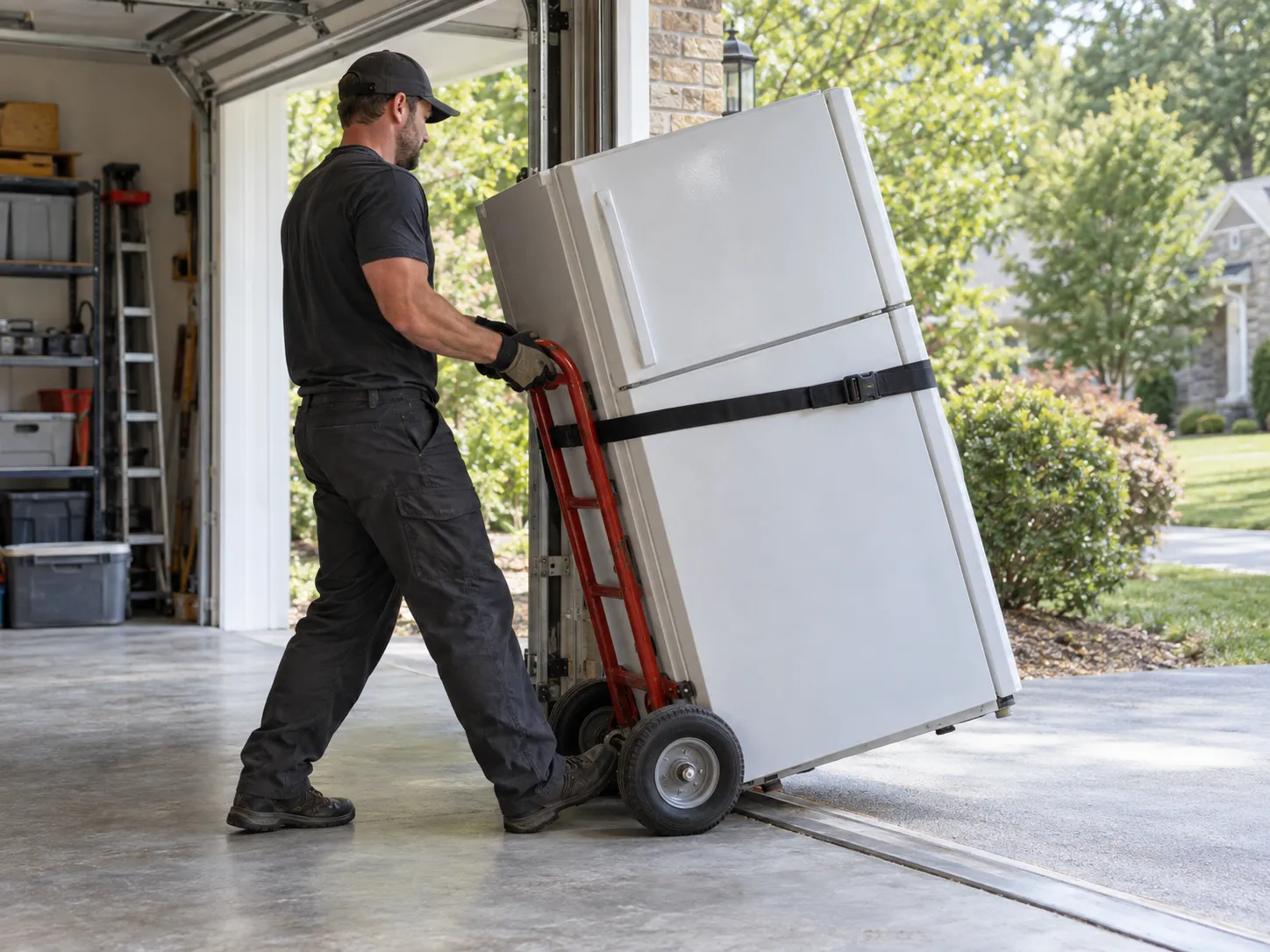
Refrigerators contain refrigerants, oils and other materials that require proper recovery. The best removal route depends on whether you are buying a replacement, whether a utility program is available, and whether you can safely move the appliance.
Compare the four common routes
| Option | Best fit | Questions to ask |
|---|---|---|
| Retailer haul-away | A new refrigerator is being delivered. | Is removal included, what condition must the old unit be in, and do access limits apply? |
| Utility or efficiency program | An eligible working unit and a current program in your service area. | Who qualifies, is pickup offered, and are size or condition rules in place? |
| Self-service facility | You have suitable transport and the facility confirms appliance acceptance. | Are fees, residency proof or refrigerant-handling steps required? |
| Full-service removal | The unit is indoors, access is difficult, or other household items are leaving too. | Does the company accept the unit, how should it be prepared, and is removal included in the estimate? |
Why appliance disposal needs a confirmed route
ENERGY STAR explains that refrigerators and freezers contain refrigerants, oils and other compounds that must be removed and recovered under federal law. Its recycling guidance points consumers toward retailers, utilities and partners in the U.S. Environmental Protection Agency’s Responsible Appliance Disposal program. Review ENERGY STAR refrigerator and freezer recycling options (accessed September 18, 2026).
Do not cut refrigerant lines, remove the compressor or dismantle the cabinet yourself. Ask the selected provider what it needs you to do. If the refrigerator is still connected to water or electricity, use the manufacturer’s instructions and a qualified person where the work requires one.
Prepare the information, then wait for instructions
- Record the refrigerator’s approximate width, height and depth.
- Note whether it is a refrigerator, freezer, compact unit or combination.
- Describe its condition and whether it is still connected.
- Measure the tightest doorway and note steps or floor changes.
- Ask whether shelves, drawers, doors or water lines should be handled before pickup.
- Keep food out of the unit and address leaks before the crew arrives.
Farragut’s garbage, junk and litter page lists large items at the curb among potential violations outside an appropriate pickup day. Confirm the collection arrangement before moving the appliance outside.
Questions for a removal company
- Do you accept this exact type of appliance?
- What preparation do you require?
- Does the estimate include indoor removal, labor and transport?
- How will access, stairs or a long carry affect the job?
- What happens if the unit is still connected when the crew arrives?
If the refrigerator is one part of a garage or moving cleanout, give the company the full list. Combining approved household items may be more practical than arranging separate trips, but the crew still needs to confirm each special item.
Sources
- ENERGY STAR: Find a Fridge or Freezer Recycling Program, U.S. guidance, accessed September 18, 2026.
- Town of Farragut: Garbage, Junk and Litter, Farragut, Tennessee, accessed September 18, 2026.